History
Ancient Mongolia
Modun Chanyu and the Xiongnu Empire
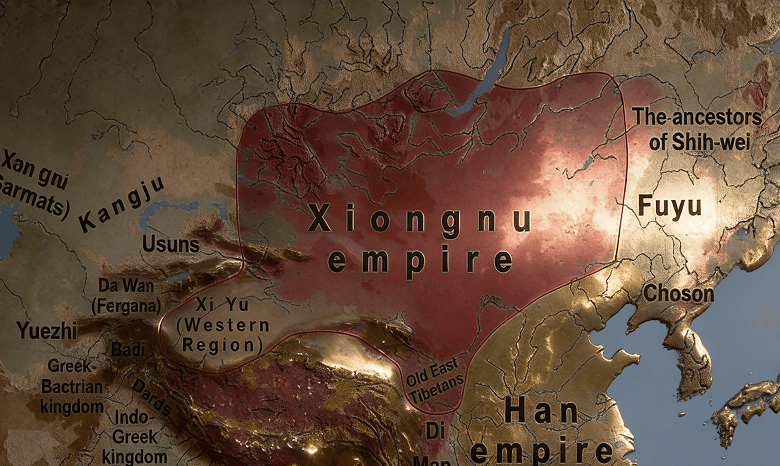
Before the Mongol Empire, Mongolia's vast steppe was home to one of the world's first great nomadic confederations: the Xiongnu Empire. Established in the 3rd century BCE, it was under the leadership of Modun Chanyu that the Xiongnu rose to dominate the steppe. Modun united fragmented tribes into a powerful state, creating a governance system that would inspire later nomadic empires.
Modun's strategic brilliance was evident in his victory over the Han Dynasty of China. His military and political acumen forced Emperor Gaozu to negotiate peace and pay tribute, marking the Xiongnu as a force to be reckoned with. This period of diplomacy established a balance of power between the steppe and agricultural civilizations.
The Xiongnu were masters of mounted warfare, renowned for their swift mobility and unparalleled archery skills. These tactics became a blueprint for later nomadic conquerors, including Chinggis Khan, who would follow in Modun's footsteps centuries later.
Legacy Today:
Modun Chanyu is often seen as a forefather of Mongolia's imperial traditions. The Xiongnu Empire's formation is viewed as the earliest chapter of Mongolia's nation-building history, setting the stage for the rise of the Mongol Empire and establishing the Mongolian people as stewards of the steppe.
Attila the Hun
Attila the Hun (406–453 CE) stands as one of the most renowned figures of the ancient steppe, often referred to as the "Scourge of God" by his Roman adversaries. While Attila's empire stretched across much of Europe, his roots trace back to the nomadic traditions of the Hunnic people, who are believed to share ancestral ties with the Xiongnu of Mongolia. This lineage connects the Huns to the rich tapestry of Mongolian steppe history, reinforcing their legacy as blue-marked Mongols.
Under Attila's leadership, the Huns became a dominant power in Europe during the 5th century CE. Renowned for their mastery of horseback warfare and composite bow archery, the Huns embodied the nomadic military tactics perfected on the Mongolian steppe. These strategies allowed Attila to defeat or threaten major empires of the time, including the Eastern Roman Empire and the Western Roman Empire.
Attila's campaigns shook the foundations of Europe, leading to the infamous sacking of cities and forcing emperors to negotiate peace through tribute. Though his invasions are remembered for their brutality, they also symbolize the strength and resilience of nomadic governance, capable of challenging the sedentary empires of their age.
Legacy Today:
Attila is celebrated as a cultural and historical bridge between the Huns and the Mongols. His story showcases the shared heritage of steppe nomads who shaped global history through their unparalleled adaptability, innovation in warfare, and leadership. To this day, Attila remains a symbol of strength and independence, deeply connected to Mongolia's ancient roots.
The Mongol Empire
The Rise of Chinggis Khan
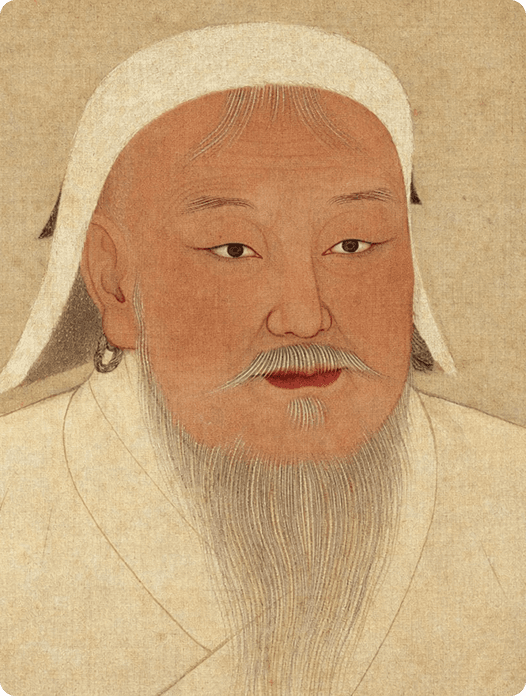
In the 13th century, Chinggis Khan (Genghis Khan), born as Temüjin, united the fragmented Mongol tribes under his leadership to form the Mongol Empire—the largest contiguous empire in history. His rise was marked by unparalleled vision, political acumen, and the ability to inspire loyalty among his people.
Chinggis Khan's unification of the Mongol tribes in 1206 CE transformed the steppe into a unified and disciplined force. The empire's success was built on innovative military strategies, adaptability, and the creation of a legal code known as the Yassa, which promoted order and justice across the vast empire.
Under Chinggis Khan's rule, the Mongols launched campaigns that reshaped the political and cultural landscapes of Asia, the Middle East, and Eastern Europe. By utilizing superior horseback warfare tactics, advanced intelligence networks, and unparalleled discipline, the Mongols conquered vast territories, including the Jin Dynasty in China, the Khwarezmian Empire in Central Asia, and parts of the Kievan Rus.
Cultural and Political Impact: Chinggis Khan was not only a conqueror but also a visionary leader who laid the foundation for trade, cultural exchange, and administrative systems. The Silk Road flourished under Mongol rule, facilitating the exchange of goods, ideas, and technologies across continents. His leadership was rooted in meritocracy, offering opportunities based on ability rather than birth.
Legacy of Chinggis Khan:
Chinggis Khan's legacy endures in Mongolia as a symbol of unity, strength, and vision. His leadership principles and reforms continue to inspire Mongolians and people worldwide. Statues, monuments, and even the modern Mongolian currency (the tögrög) honor his unparalleled achievements. Today, his name remains synonymous with the boundless ambition and resilience of the Mongol people.
Following Chinggis Khan's death in 1227 CE, the Mongol Empire was divided among his heirs into four major khanates:
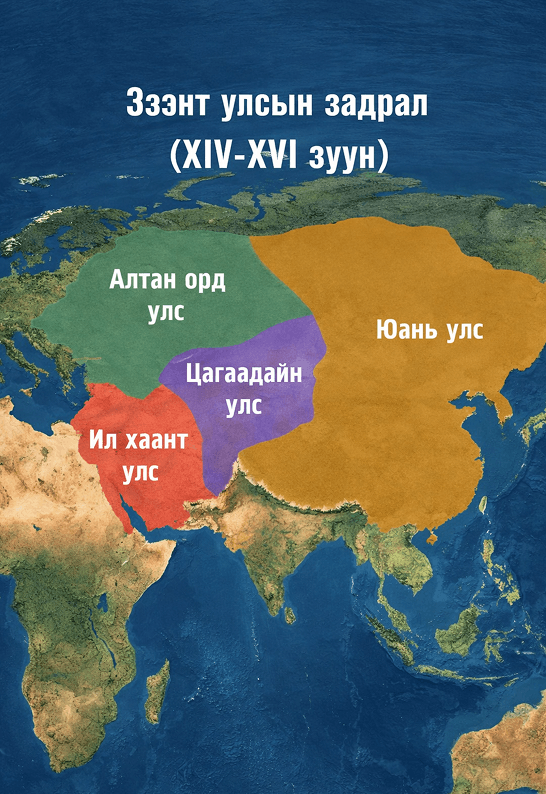
- The Yuan Dynasty (China): Founded by Khubilai Khan, a grandson of Chinggis Khan, the Yuan Dynasty ruled China from 1271 to 1368. Khubilai Khan embraced Chinese culture and established a centralized government, while maintaining Mongol traditions. The dynasty facilitated trade and cultural exchange, making Beijing the political and cultural center of the empire.
- The Golden Horde (Altan Ordnii Uls): This khanate, ruled by the descendants of Chinggis Khan's eldest son, Jochi, controlled vast territories in Eastern Europe and Russia. Known for their strong economic ties and military prowess, the Golden Horde played a significant role in shaping the history of Eastern Europe.
- The Chagatai Khanate (Tsagaadain Uls): Established in Central Asia, this khanate was a melting pot of cultures, blending Mongol governance with Persian and Turkic influences. The Chagatai Khanate was vital in maintaining trade routes and cultural exchange along the Silk Road.
- The Ilkhanate (Persia): Ruled by Hulegu Khan, another grandson of Chinggis Khan, the Ilkhanate governed Persia and the Middle East. The Ilkhanate left a lasting legacy in art, architecture, and scholarship, blending Mongol traditions with Persian culture.
- The Decline of the Empire: Despite its unprecedented expansion, the Mongol Empire eventually fragmented due to internal power struggles, cultural differences, and the sheer size of its territories. By the late 14th century, the once-unified empire had dissolved into independent khanates.
- Cultural Legacy: The Mongol Empire's impact on global history is immeasurable. It bridged East and West, fostering an era of unprecedented cultural and economic exchange. Its legacy endures in Mongolia, where Chinggis Khan is revered as a national hero and the father of the Mongol nation.
The Manchu Influence (17th–19th Century)
Following the fragmentation of the Mongol Empire, Mongolia entered a period of political upheaval and external influences. This era saw the decline of unified Mongol power, the rise of competing regional factions, and the growing influence of neighboring empires like the Manchus and the Russians. Despite these challenges, Mongolian traditions and identity endured.
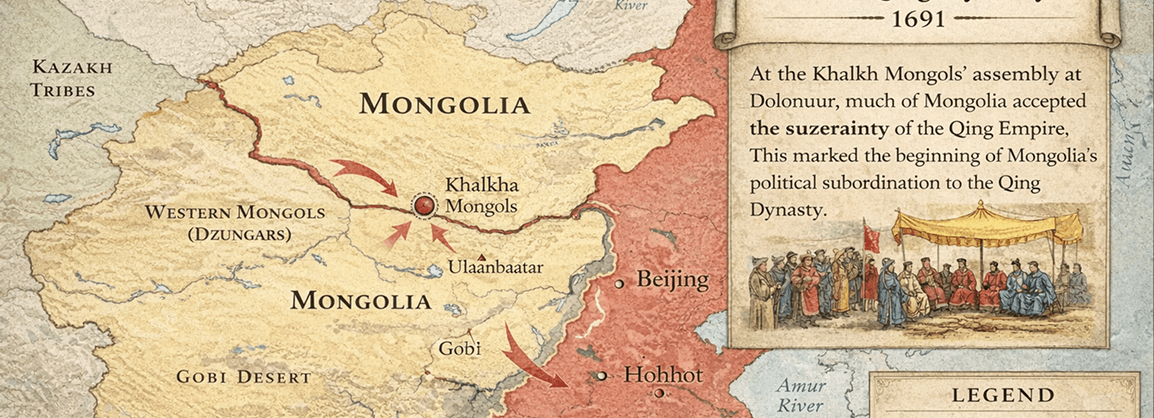
In the 17th century, the Qing Dynasty of China, led by the Manchus, exerted control over Mongolia. By 1691, at the Khalkh Mongols' assembly at Dolonuur, much of Mongolia had accepted Qing suzerainty. This marked the beginning of Mongolia's political subordination to the Qing Empire.
During this period, Mongolia was divided into two main regions:
- Outer Mongolia (Khalkha): The northern region, which maintained a degree of autonomy under the Qing administration.
- Inner Mongolia: The southern region, which was more heavily integrated into Qing rule.
The Qing administration imposed a feudal system that restricted Mongolian mobility and autonomy. Livelihoods were affected as nomadic pastoralism, the cornerstone of Mongolian culture, was tightly regulated. However, Buddhism flourished during this era, with the construction of monasteries and the rise of the Bogd Khan as a spiritual leader.
Bogd Khan and the Early Independence Movements
In the late 19th and early 20th centuries, Mongolia saw a resurgence of national identity. The Bogd Khan, a revered religious and political leader, became a unifying figure. The ninth reincarnation of the Jebtsundamba Khutuktu, he symbolized Mongolian resistance to foreign domination.
Key events included:
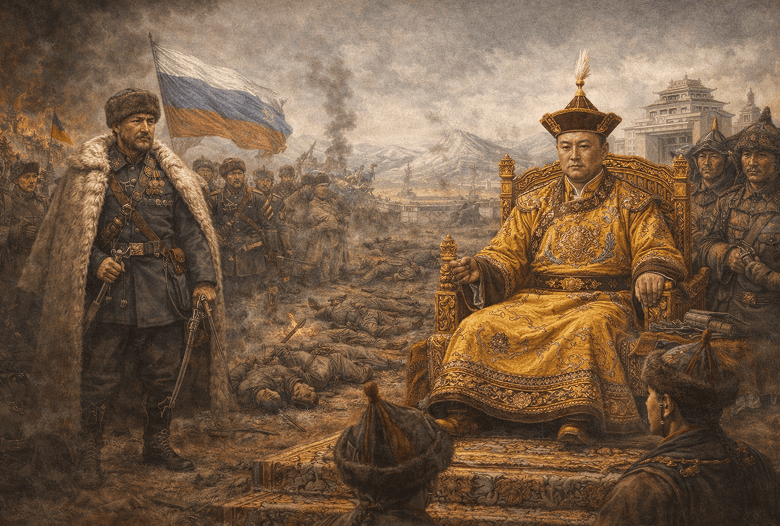
- Baron Ungern von Sternberg's Role (1921): A controversial figure in Mongolia's history, the Russian White Guard leader Baron Roman von Ungern-Sternberg invaded Mongolia in 1921 to drive out Chinese forces. His army liberated Urga (modern-day Ulaanbaatar), reinstating the Bogd Khan as the head of state. Although his reign was short-lived, it demonstrated Mongolian aspirations for independence.
- The Decline of Qing Power: The weakening of the Qing Dynasty in the early 20th century provided an opportunity for Mongolian leaders to advocate for autonomy. The collapse of the Qing Empire in 1911 was a turning point, as Mongolia declared its independence under the leadership of the Bogd Khan.
Legacy of the Post-Imperial Period
Despite centuries of foreign rule, the Mongolian spirit persisted. The nomadic lifestyle, Buddhist traditions, and cultural practices remained resilient. The political struggles and efforts for independence during this period laid the foundation for modern Mongolia's eventual emergence as a sovereign nation in the 20th century.
This era is a testament to the enduring strength of Mongolian identity, which survived centuries of external pressure and adapted to changing geopolitical realities.
Independence and the 20th Century
The 20th century marked a pivotal era for Mongolia as the country transitioned from centuries of foreign rule to reclaiming its sovereignty. This period saw the rise of revolutionary movements, the establishment of a socialist state, and the evolution into modern Mongolia.
In 1911, with the collapse of the Qing Dynasty, Mongolia declared its independence under the leadership of Bogd Khan, marking the end of over 200 years of Qing control. However, the path to full independence was fraught with challenges.
1919–1921: Chinese Reoccupation and Baron Ungern's Campaign After a brief period of autonomy, Chinese forces reoccupied Mongolia in 1919, dissolving its independence. In response, Baron Roman von Ungern-Sternberg, a Russian White Guard leader, led an army to expel the Chinese forces in 1921. Though controversial, his campaign reinstated the Bogd Khan's leadership, albeit temporarily.
1921 Revolution Supported by the Soviet Union, the Mongolian People's Party (later the Mongolian People's Revolutionary Party) launched a revolution in 1921, successfully ousting both Chinese forces and Baron Ungern's troops. Mongolia was declared an independent people's republic in 1924 following the death of the Bogd Khan, solidifying its transition to a socialist state.
Key Figures in the Revolutionary Era
Damdin Sukhbaatar
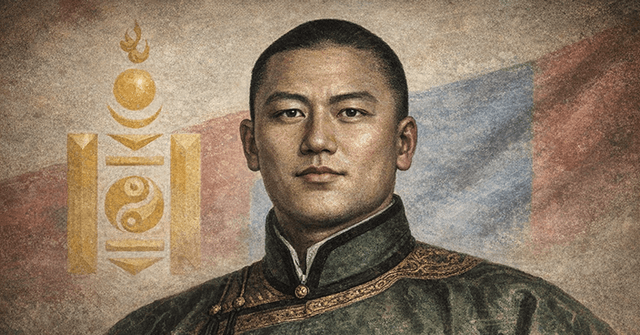
Known as the "Father of the Mongolian Revolution," Sukhbaatar played a critical role in leading the revolutionary forces to victory in 1921.
Khorloogiin Choibalsan
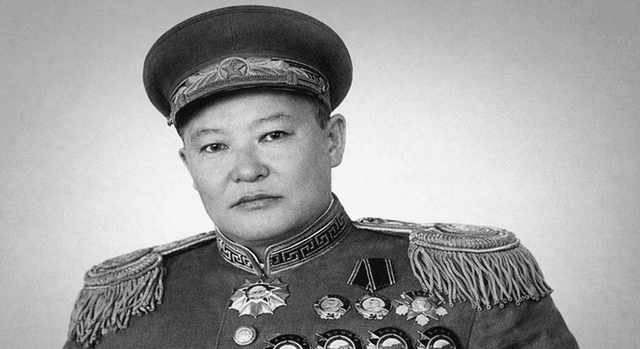
A prominent leader during Mongolia's early socialist period, Choibalsan implemented sweeping reforms, including land redistribution and the establishment of collective farming.
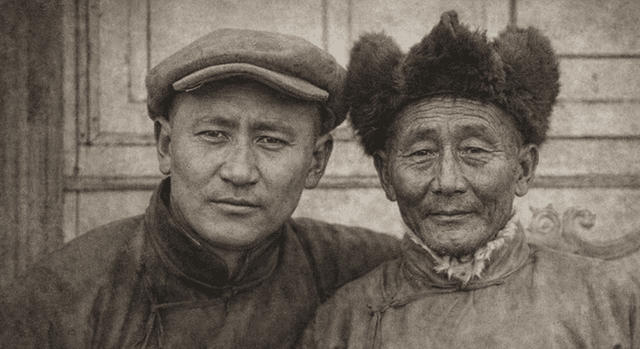
Soliiin Danzan & Dogsomyn Bodoo
Early leaders of the Mongolian People's Party who significantly contributed to the foundation of the socialist state and national independence.
The Socialist Period (1924–1990)
With the establishment of the Mongolian People's Republic in 1924, the country aligned closely with the Soviet Union. This period was characterized by significant political, social, and economic changes:
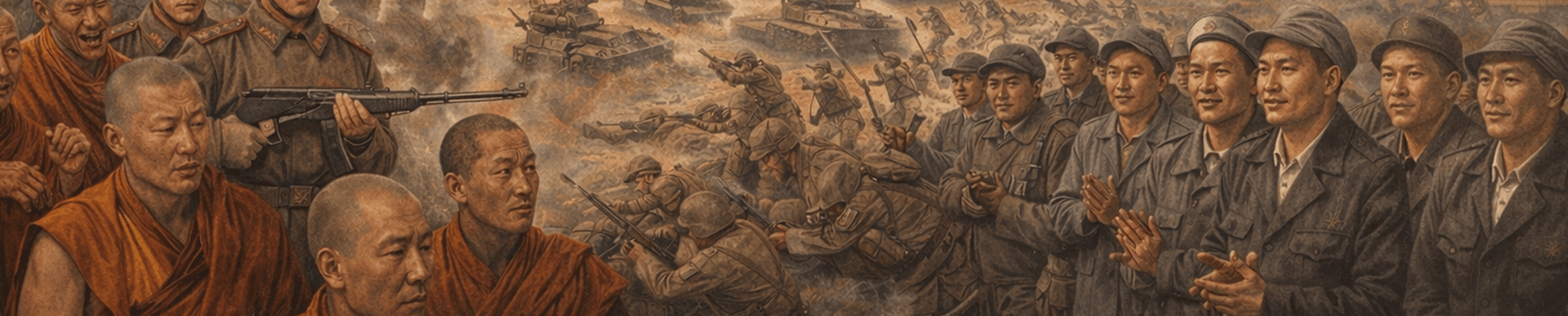
Cultural and Religious Repression:
The socialist government viewed Buddhism as a threat to its authority, leading to the destruction of monasteries and the persecution of monks. By the late 1930s, over 18,000 monks were purged, and religious practices were heavily suppressed.
Modernization and Industrialization:
The government launched ambitious programs to modernize Mongolia's economy and infrastructure, transitioning from a nomadic pastoral system to a more industrialized and urbanized society.
Khalkh Gol Battle (1939):
Mongolia played a strategic role during World War II. The Battle of Khalkh Gol, fought against Japanese forces along the eastern border, was a decisive victory for the Soviet-Mongolian alliance. This victory secured Mongolia's eastern borders and reaffirmed its close ties with the Soviet Union.
1940s Constitution and Soviet Influence:
Mongolia adopted a new constitution in 1940, further aligning itself with Soviet socialist principles. Political power was centralized under the Mongolian People's Revolutionary Party, and the country became a satellite state of the USSR.
The Road to Democracy:
By the late 1980s, the global wave of democratization and the decline of the Soviet Union sparked calls for political reform in Mongolia. The peaceful Democratic Revolution of 1990 marked the end of one-party rule and the beginning of a new era for Mongolia.
Legacy of the Revolutionary Period:
The 20th century transformed Mongolia from a feudal, theocratic society into a modern nation-state. While the socialist era brought challenges, including repression and external dependence, it also laid the groundwork for education, infrastructure, and governance systems that supported Mongolia's transition to democracy.
Modern Mongolia: The Path to Democracy and Beyond
The Democratic Revolution of 1990
The collapse of the Soviet Union and the global wave of democratization in the late 20th century profoundly transformed Mongolia. The country transitioned from a one-party socialist system to a vibrant democracy while embracing a market economy. Modern Mongolia is a blend of its nomadic heritage and contemporary aspirations.
In 1990, inspired by the political changes sweeping across Eastern Europe, Mongolia witnessed peaceful protests calling for political and economic reforms. Led primarily by students and intellectuals, these demonstrations culminated in the resignation of the government and the adoption of democratic principles.
Key milestones of the democratic transition include:
- Multi-Party Elections (1992): Mongolia held its first democratic elections under a new constitution, guaranteeing freedoms such as speech, religion, and press.
- Market Economy: The country shifted from a centrally planned economy to a market-oriented one, privatizing state assets and fostering entrepreneurship.
Challenges and Achievements
The shift to democracy and a market economy brought both opportunities and challenges:
- Economic Growth: Mongolia experienced rapid economic development, driven largely by its abundant mineral resources, including copper, gold, and coal. The mining boom of the 2000s significantly boosted GDP and attracted foreign investment.
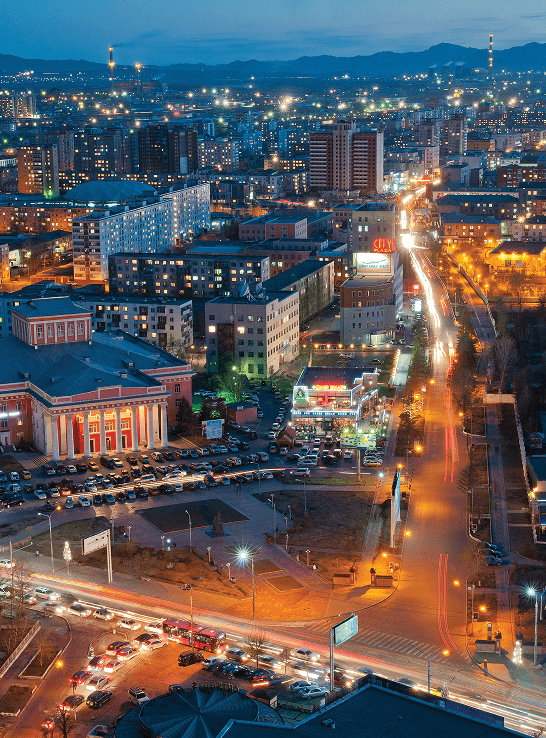
- Urbanization: Ulaanbaatar grew rapidly, becoming home to nearly half of the country's population. This urban expansion has brought opportunities and challenges, including housing shortages and air pollution.
- Cultural Revival: With the fall of socialism, Mongolia experienced a revival of its traditional culture and religion. Buddhism regained prominence, and festivals like Naadam flourished.
21st Century Mongolia: A Nation of Possibilities
- Economic Diversification: While mining remains the backbone of the economy, efforts are being made to diversify into agriculture, tourism, and renewable energy.
- Global Integration: Mongolia has embraced a "third neighbor" policy, strengthening ties with countries like the United States, Japan, South Korea, and the European Union, while maintaining balanced relations with its neighbors, Russia and China.
- Preserving Nomadic Heritage: Despite rapid modernization, Mongolia remains deeply connected to its nomadic roots. Efforts to preserve traditional lifestyles and promote sustainable tourism highlight the country's commitment to its cultural identity.
- Environmental Awareness: As climate change impacts the delicate balance of Mongolia's ecosystems, the country is increasingly focused on conservation and promoting eco-friendly practices.